FLOW N_W_
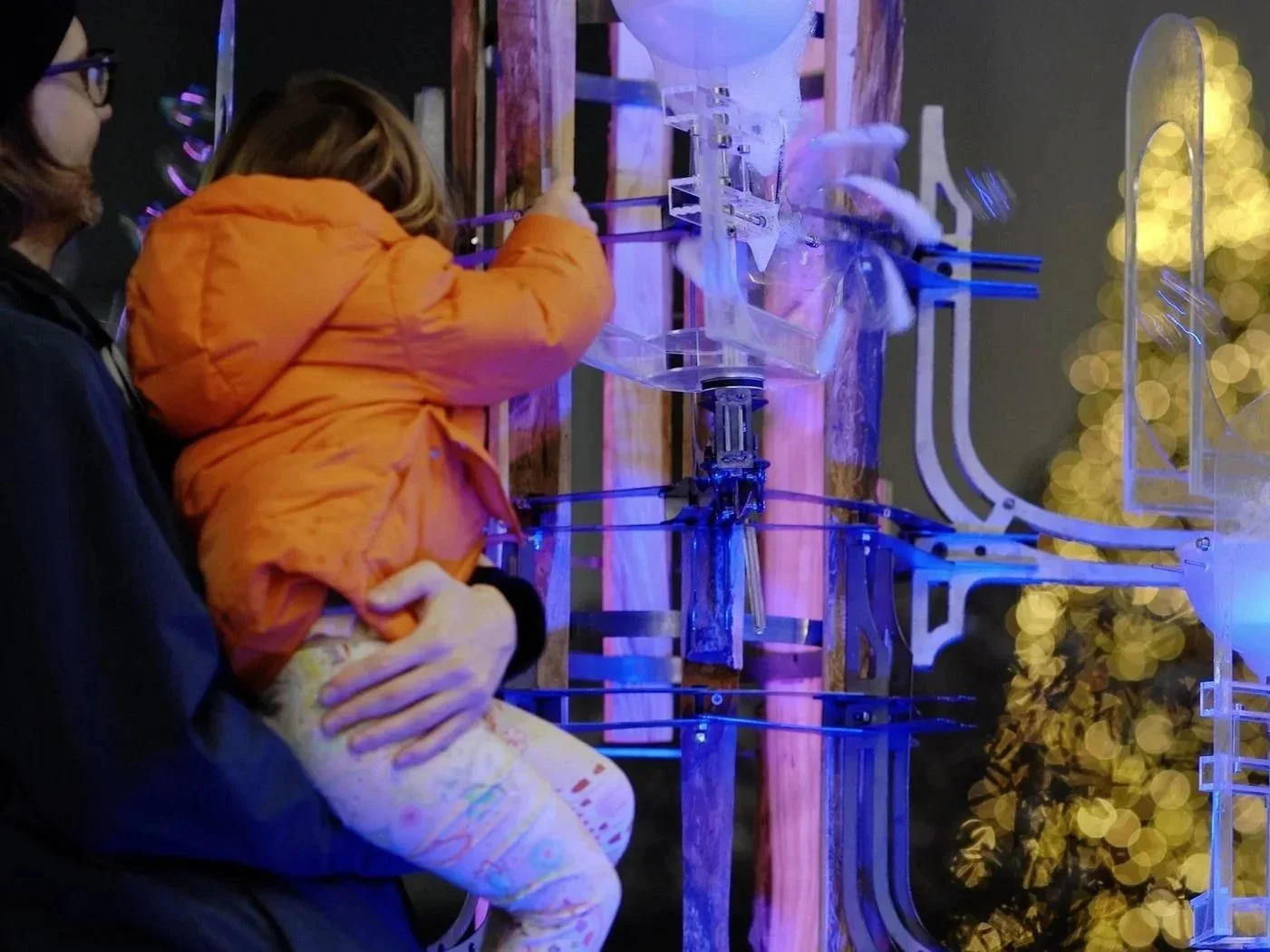
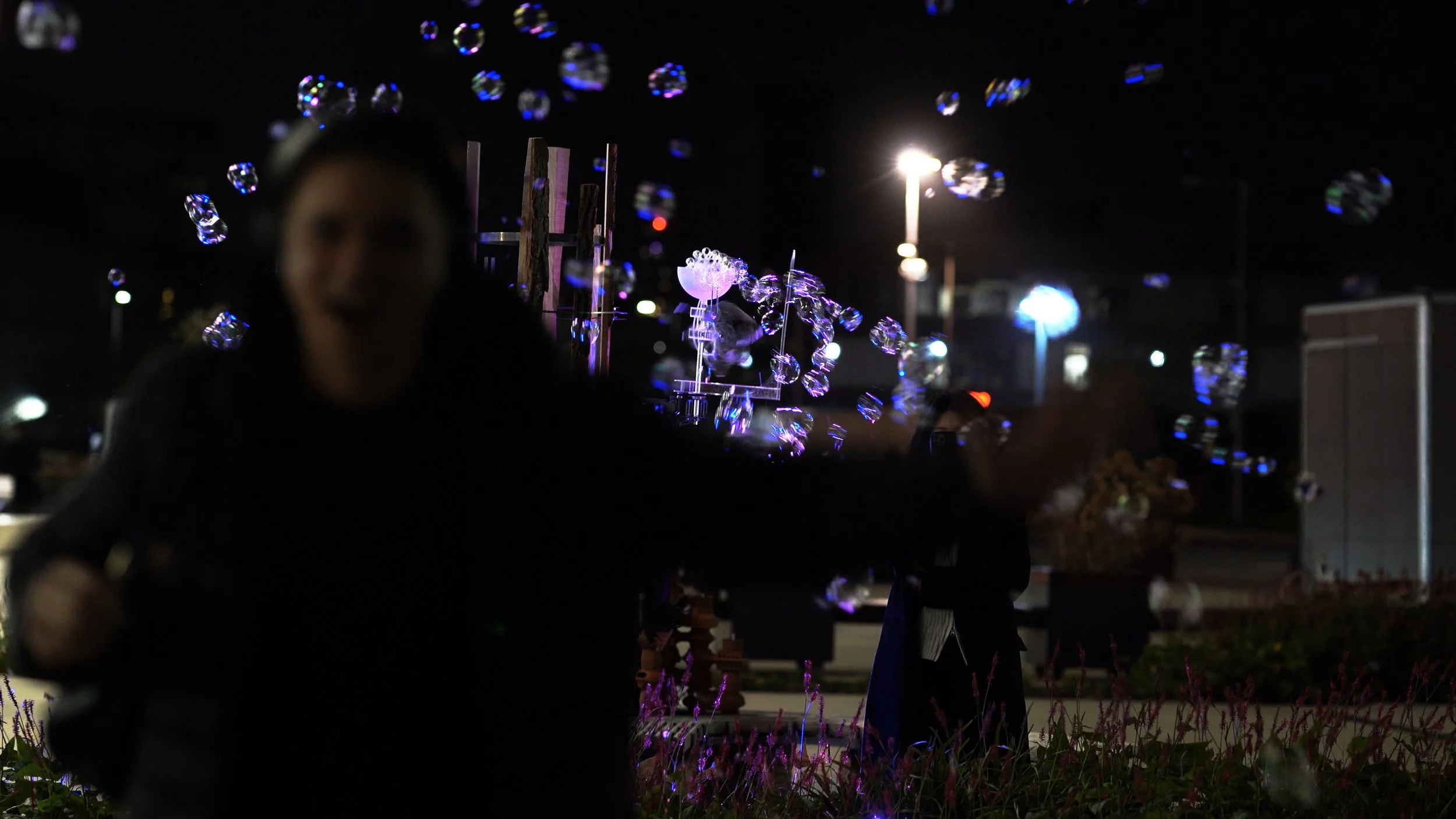
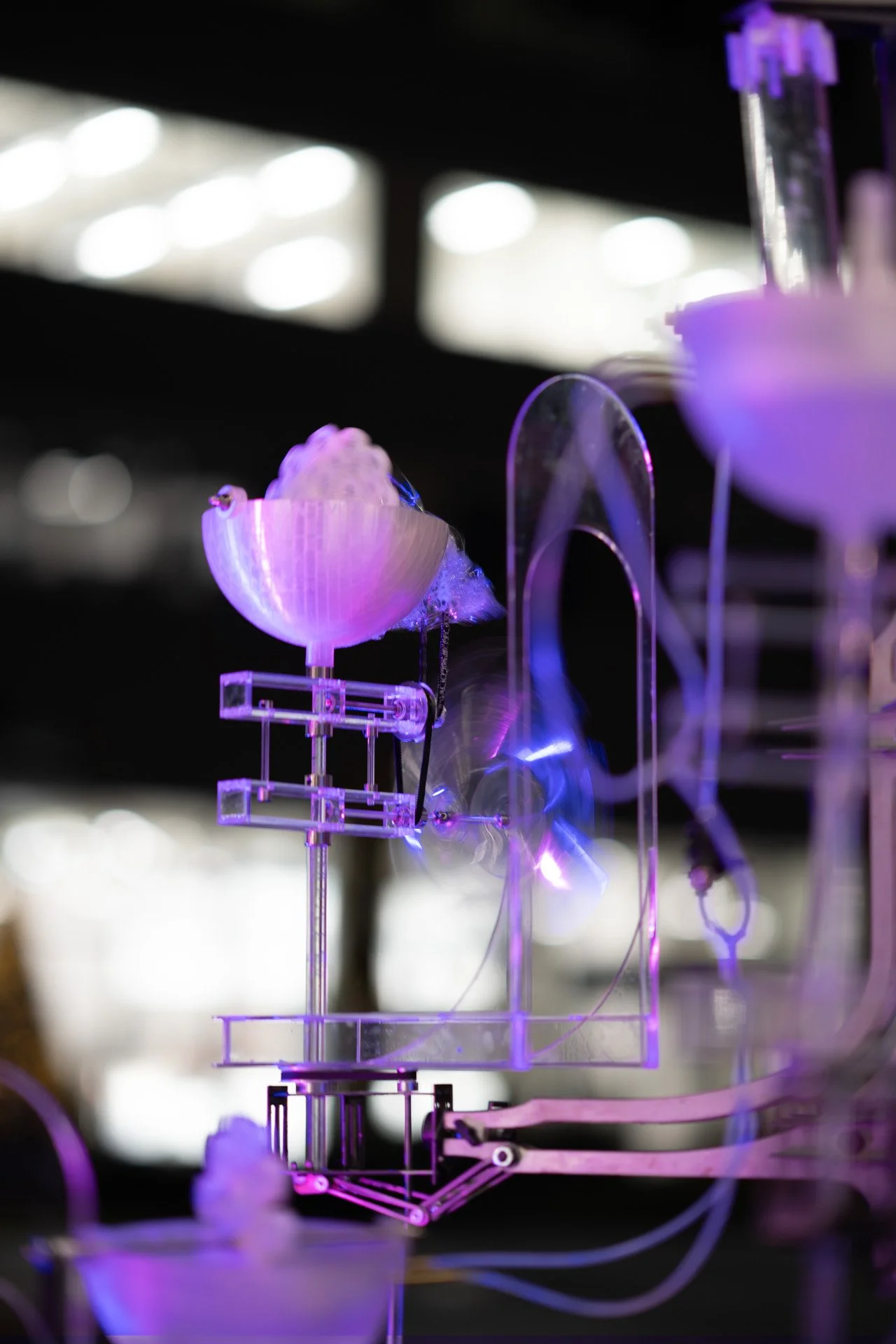
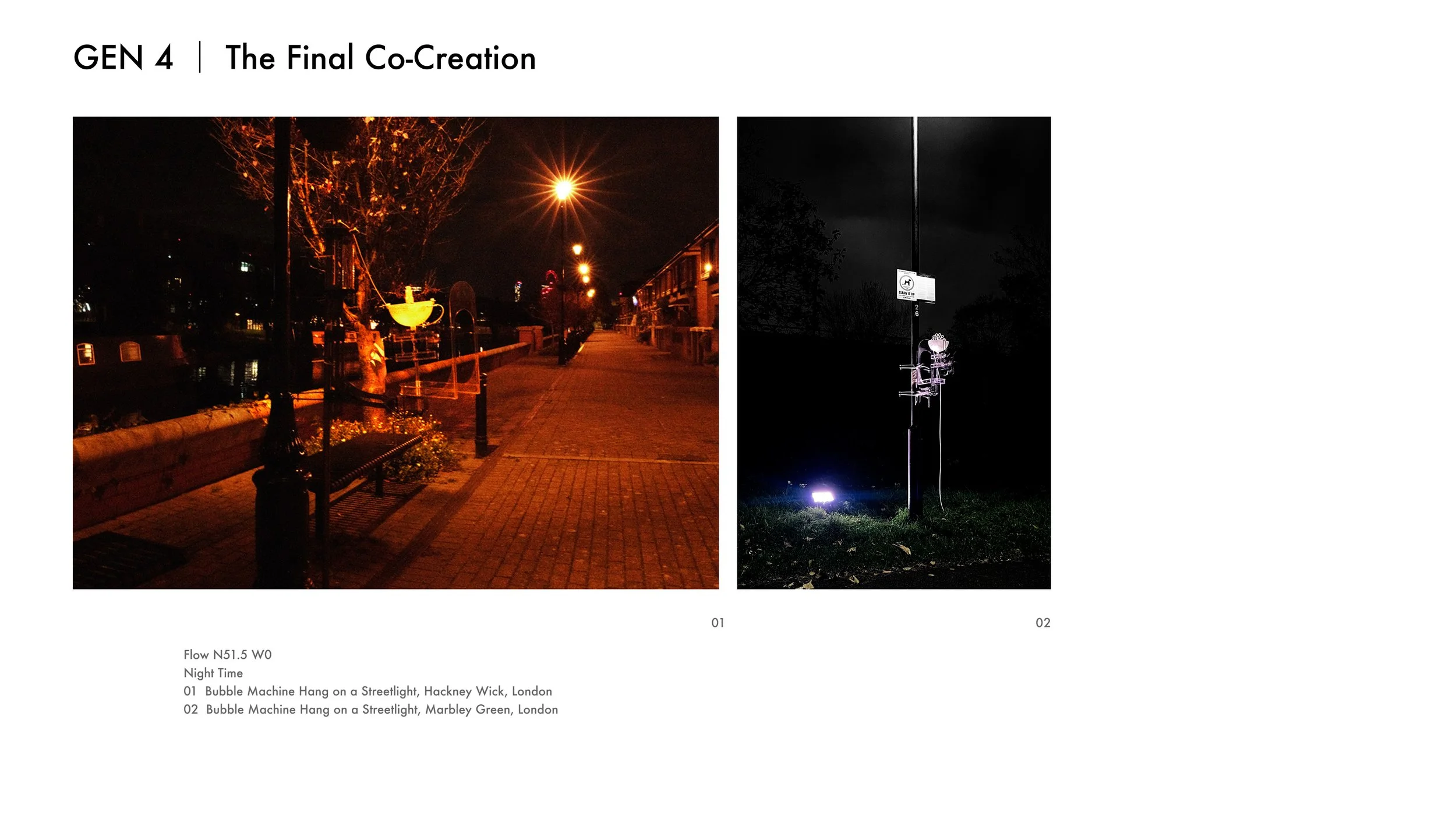
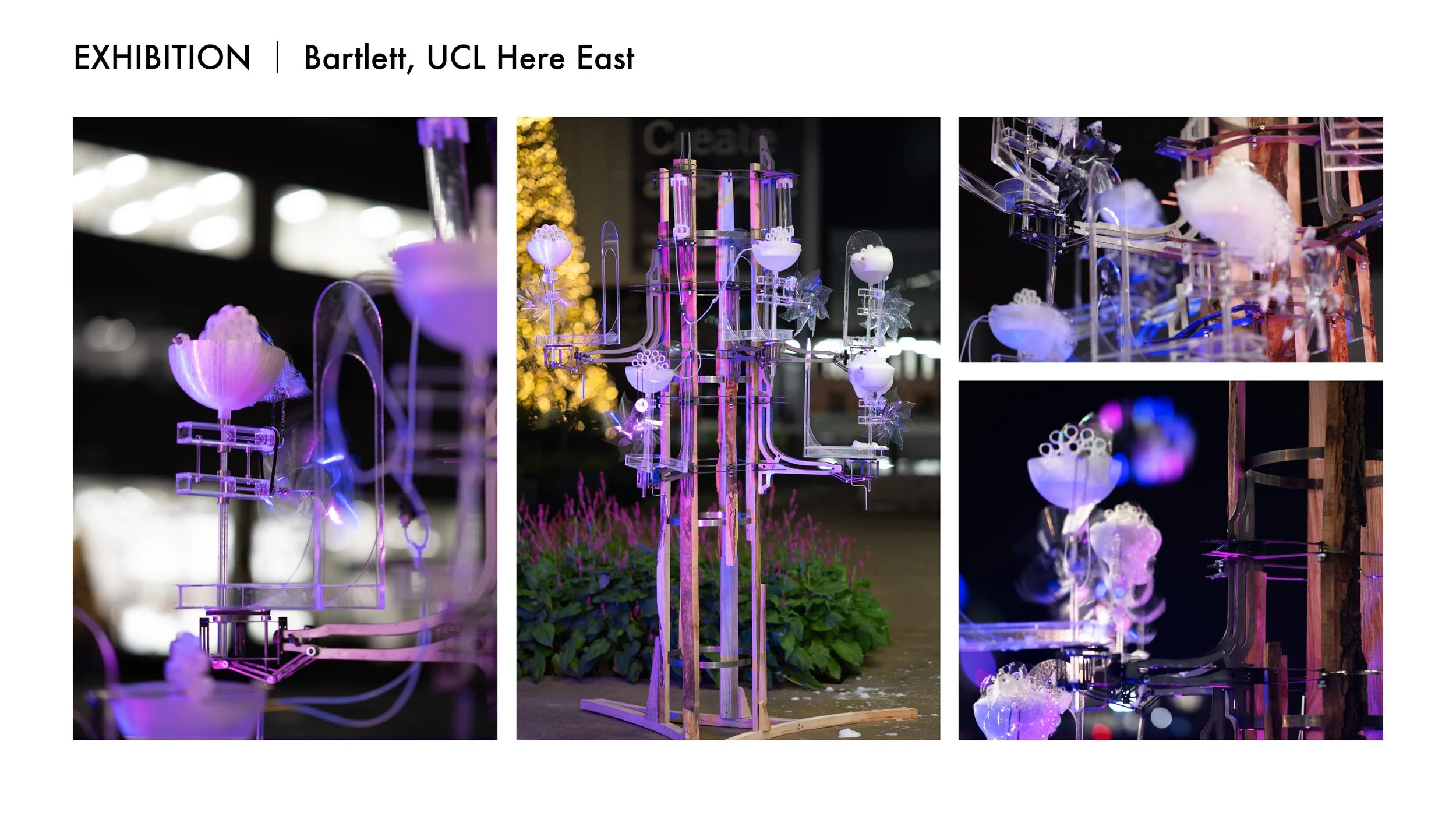
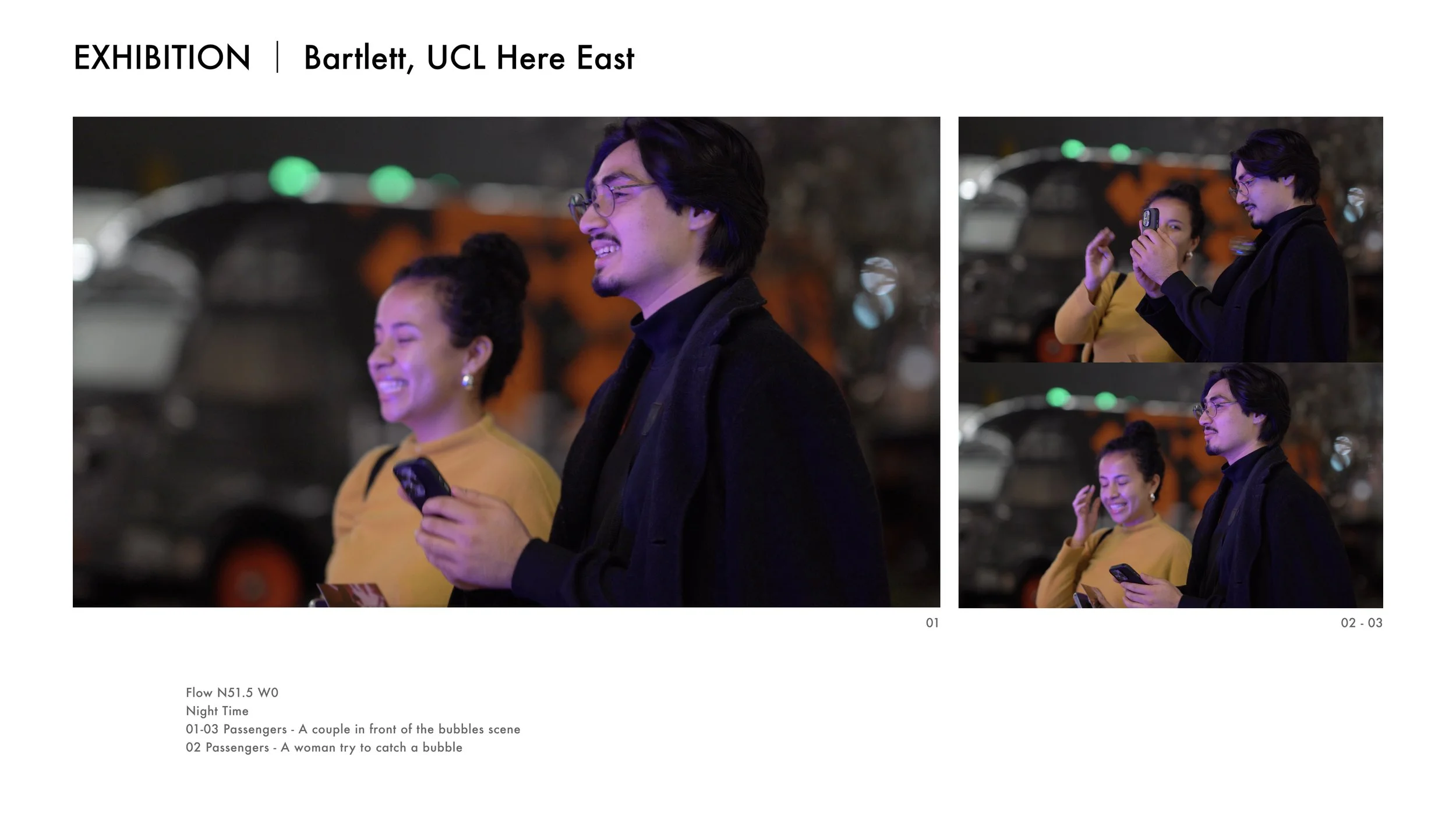
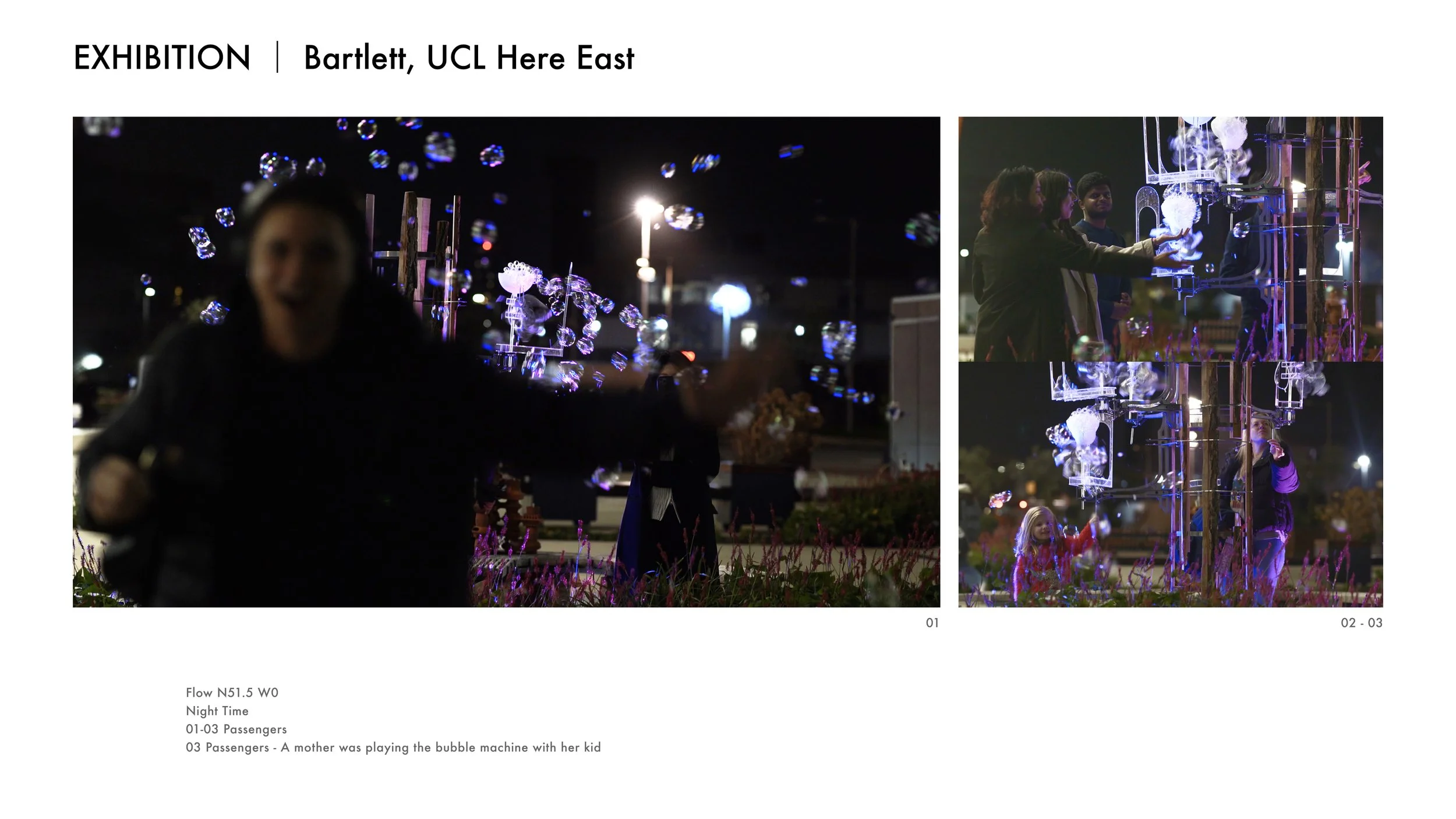
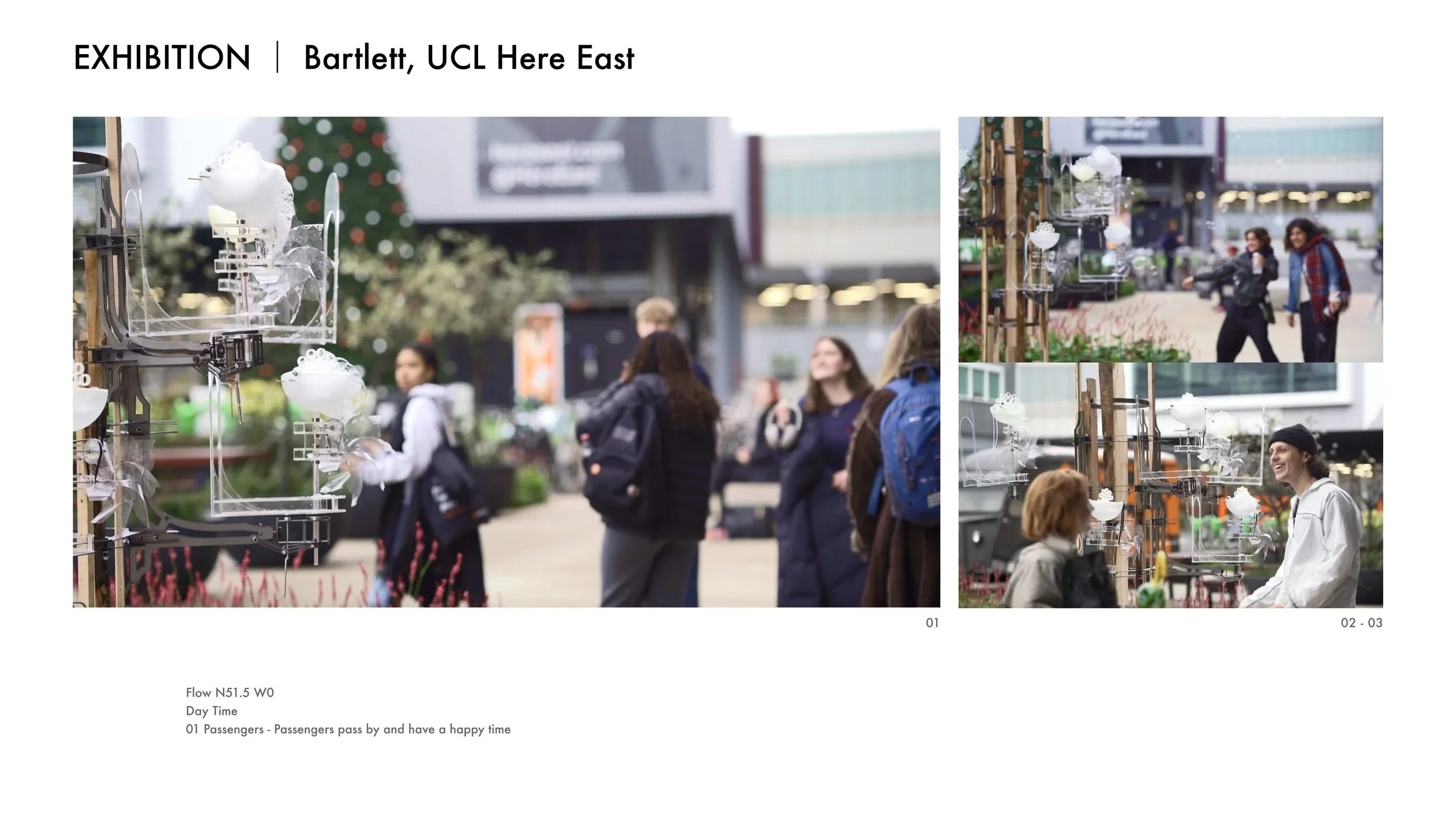
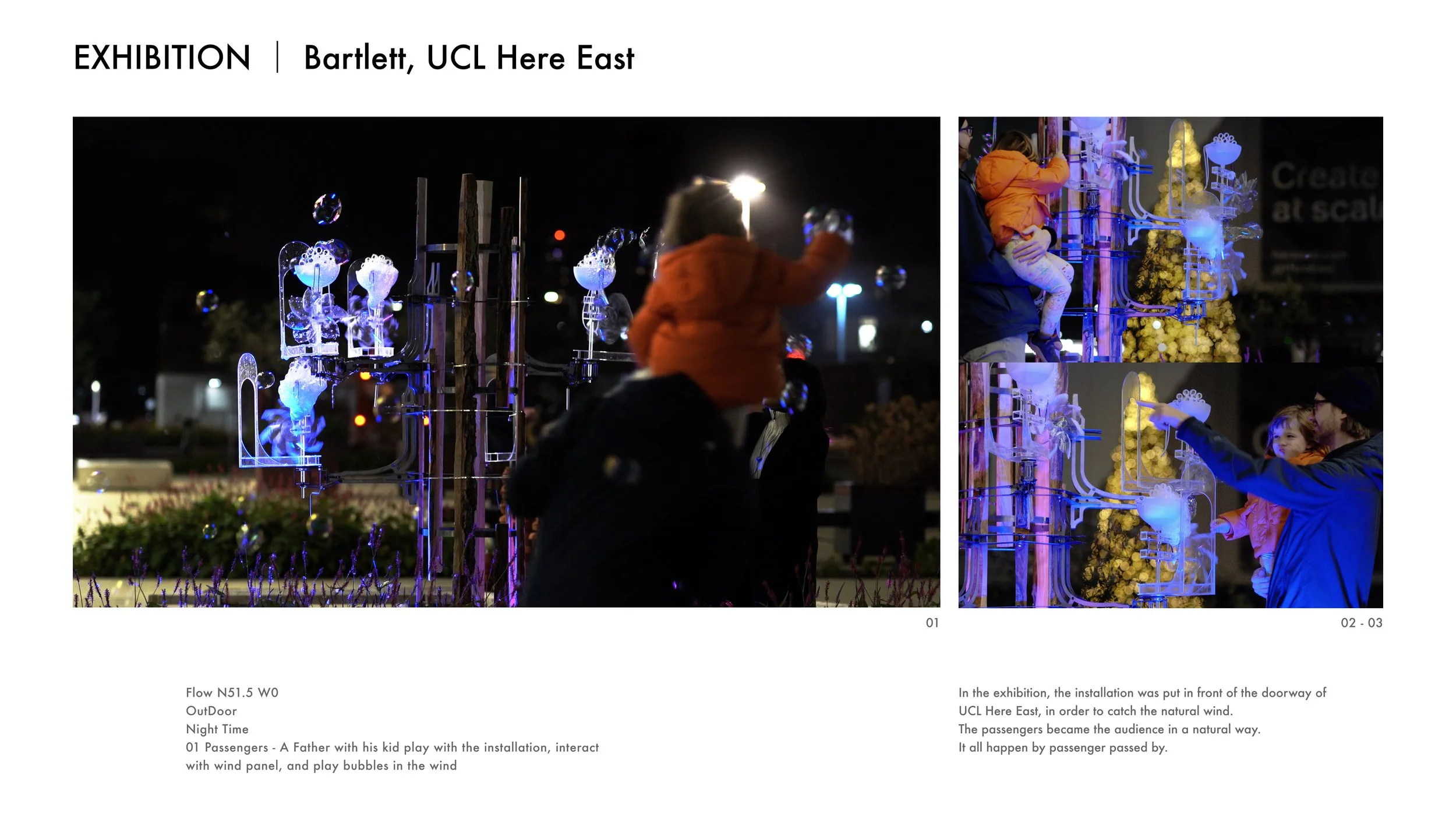
is an outdoor installation design experience that engages people to collaborate with wind,
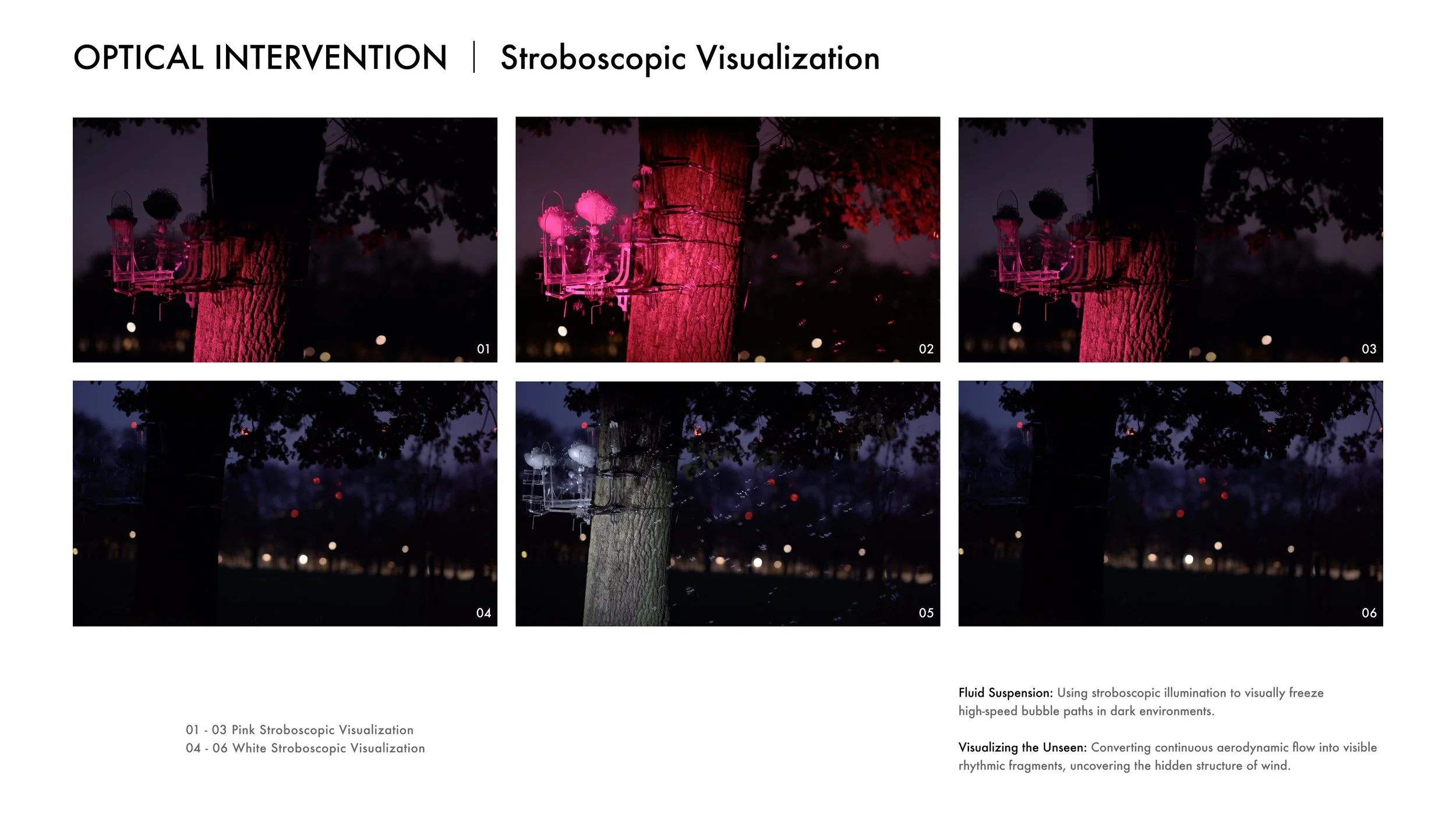
using bubbles to show wind patterns in the local position.
Design Research Process
CO-CREATE THROUGH THE LENS OF TAOISM
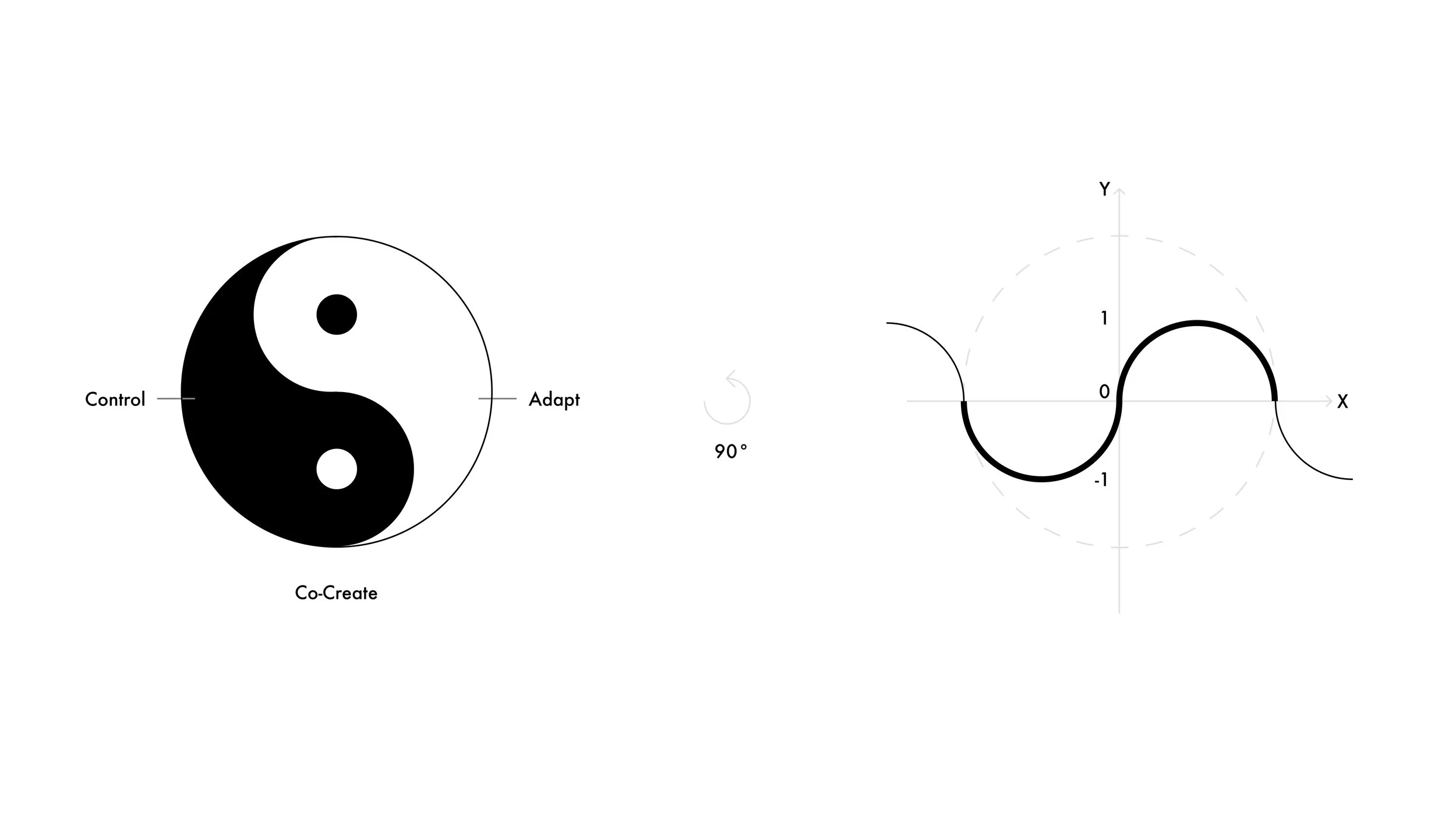
The central concept and methodology of this project is Co-Creation.
Co-Creation can be seen as "Control in Adaptation" and "Adaptation in Control," interpreted through the lens of Taoism.
Similarly, it can be viewed in the simplest scientific terms as a sine wave.
Control and Adaptation are two parameters that oscillate between 0 and 1, and their relationship is not linear.
The issue today isn’t a lack of resources, but how we use them. Design today prioritizes control: predictability and stability.
And Over-Control → Ignores Ecological Balance.
Research Question
How can interactive systems embrace the uncertainty of nature—such as wind —to create both ecological balance and emotional resonance?
EFFORTLESS DYNAMICS
Wind Pattern Analysis
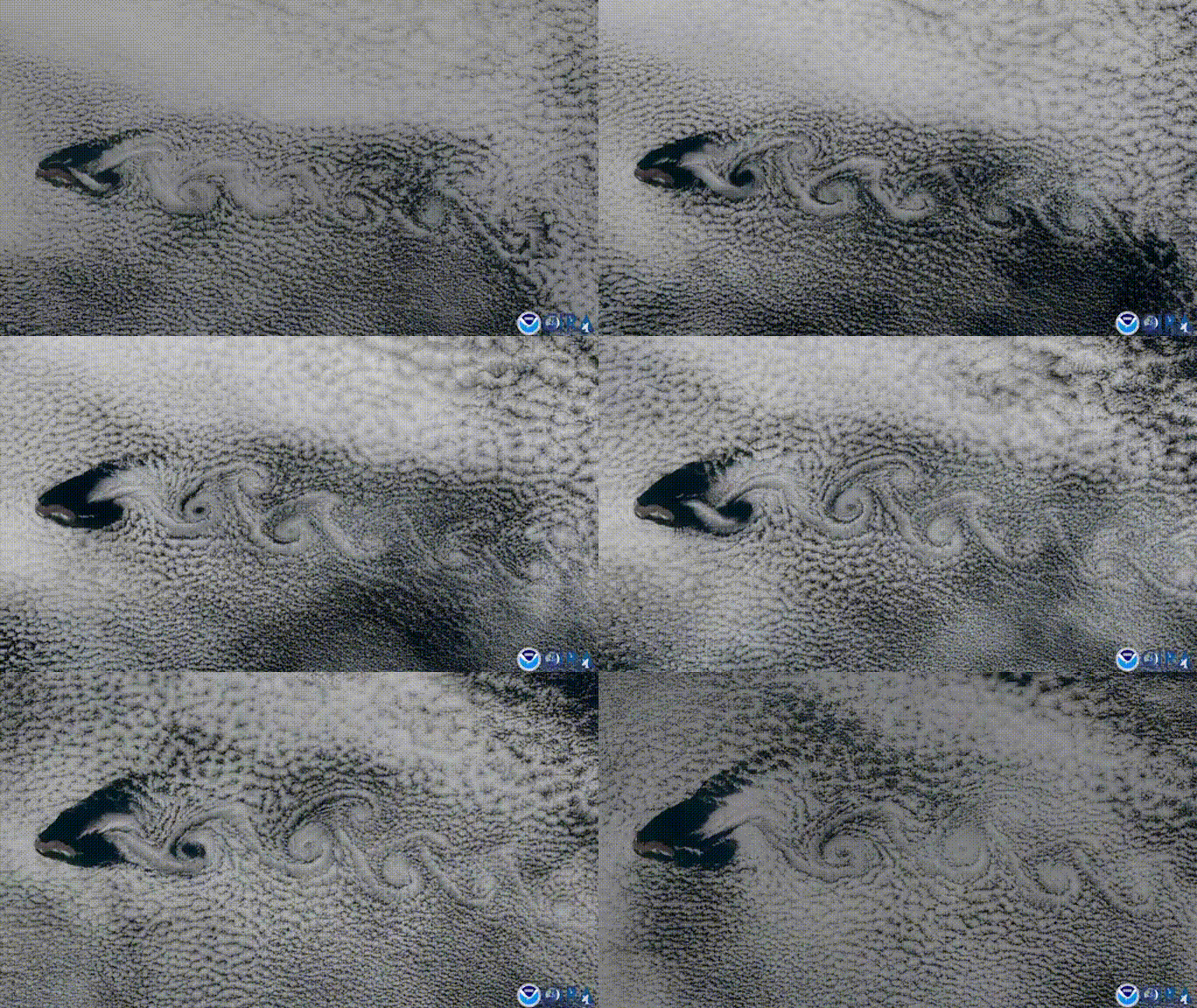
KARMAN STREET VORTEX PATTERN
Karman vortex streets, also known as von Kármán vortices, are linear chains of spiral eddies that form in places where fluid flow is disturbed by an object. These repeating patterns may emerge in the atmosphere, resulting in swirling patterns in clouds. Most often, cloud-related Karman vortex street activity is visible from space.
IDEATION
Inspired by the von Kármán vortex street in fluid dynamics, we recognize that airflow patterns can be significantly affected by relatively small “obstacles”. This phenomenon creates a pure natural art form that we seldom witness firsthand. We began to explore how to use bubbles to create this impressive effect in the air.
Image: BBC Programmes
EFFORTLESS DYNAMICS
Interactive Screen Simulation
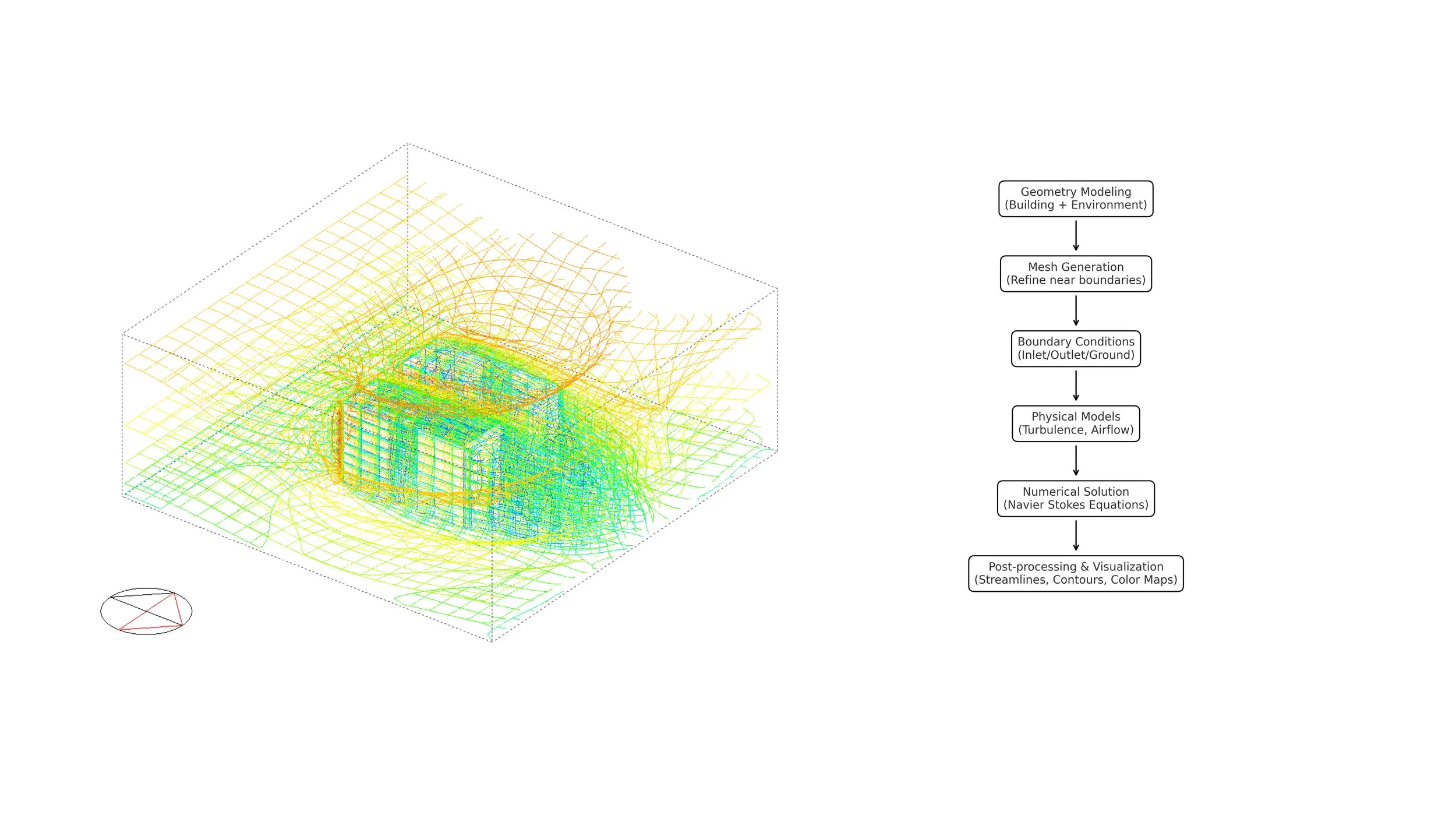
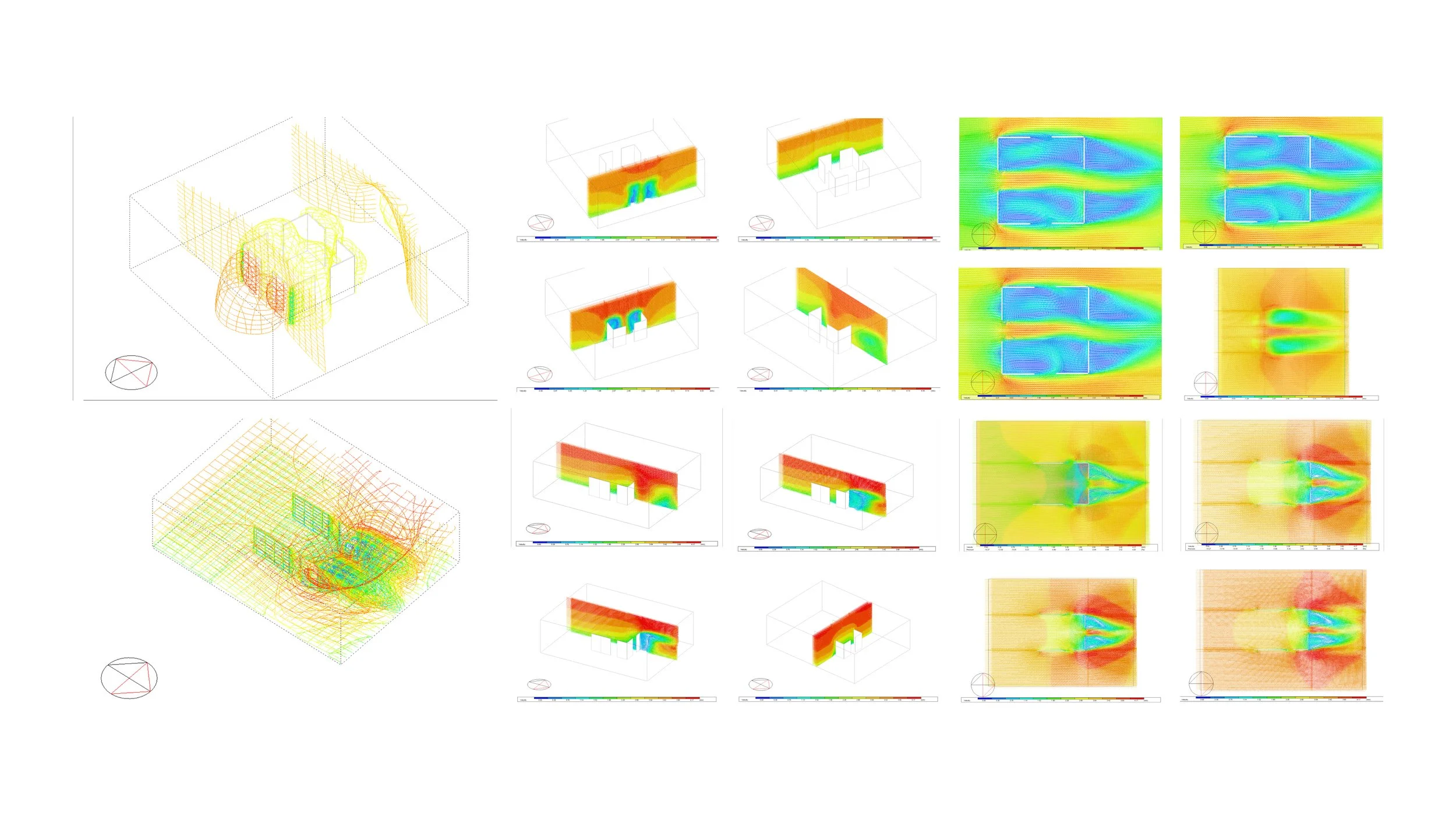
SIMULATION OUTCOME
As illustrated in the figure, a simple arrangement of four Interactive Screens
can disrupt airflow and create complex vortex patterns under direct airflow.
EXPERIMENTAL ITERATION AS CO-CREATION
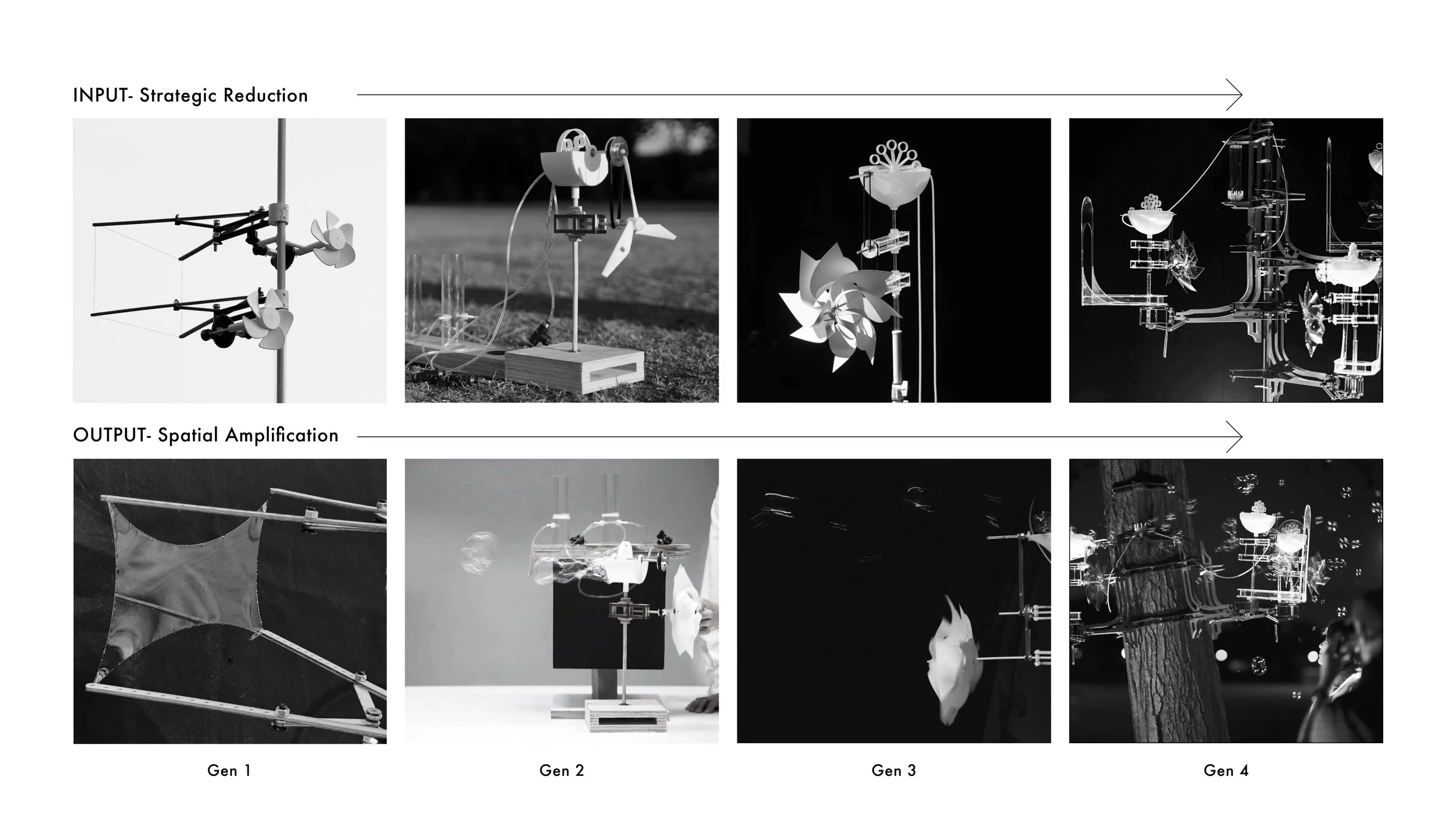
ITERATION OF CO-CREATION
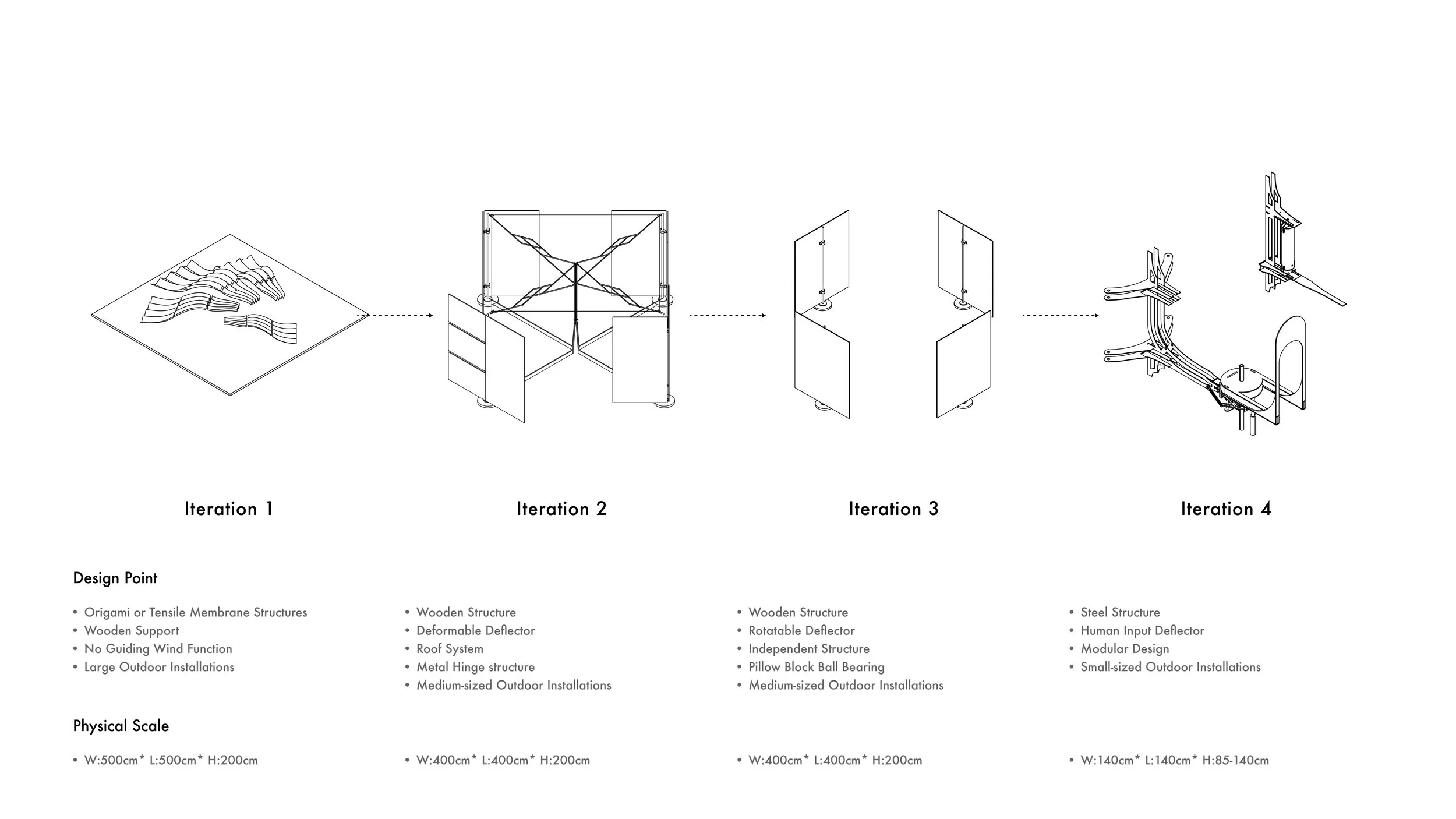
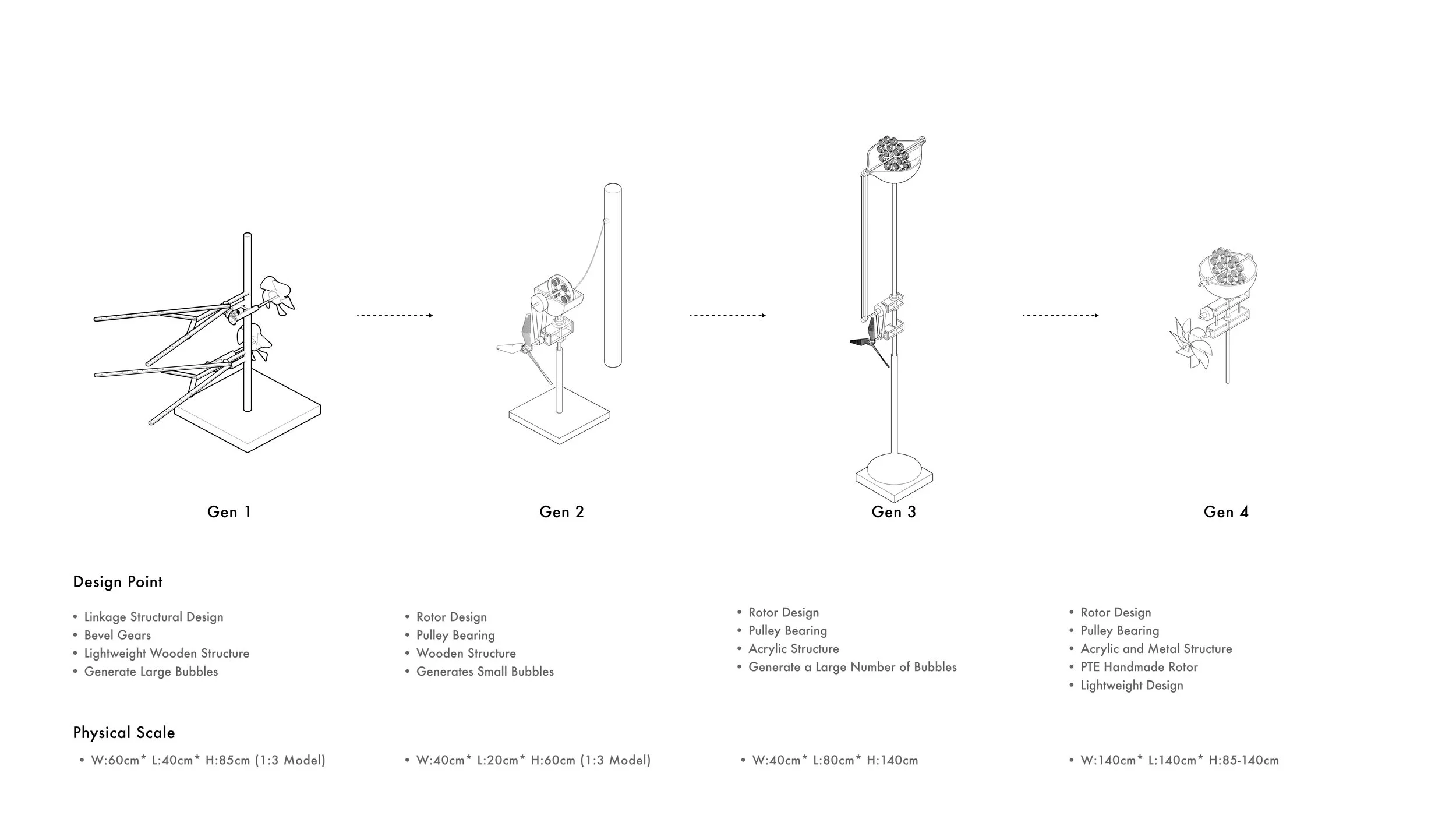
Bubble Machine Gen 1 - 4
Interactive Screen Gen 1 - 4
GEN 2
Wind Pattern Experiment
EXPERIMENTAL AIM
Assess how deflectors impact multidirectional airflow.
Evaluate the influence of deflector shape on wind patterns.
Analyze the relationship between physical obstacles and vortex formation.
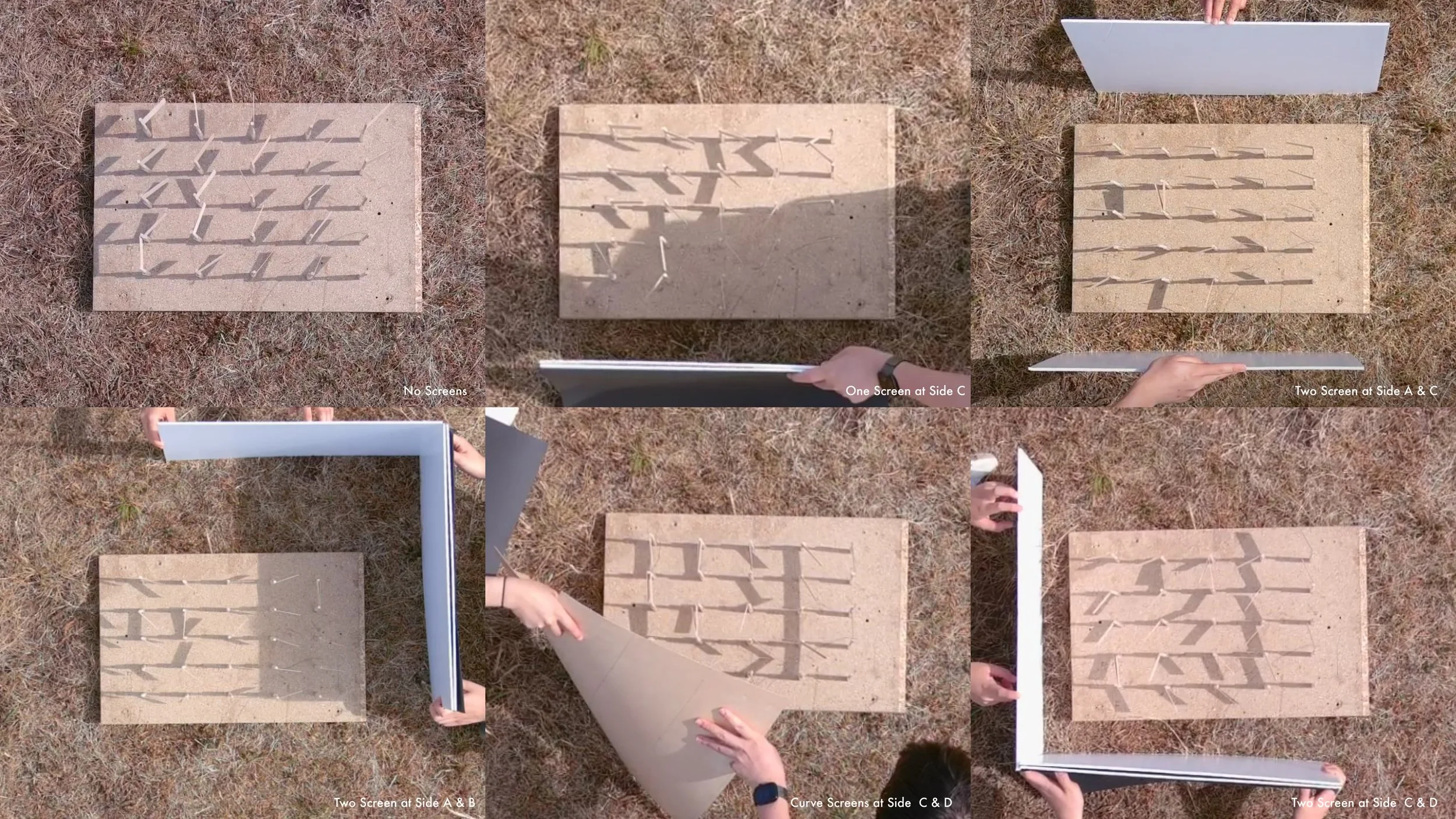
EXPERIMENTAL OUTCOMES
Deflectors significantly impede airflow from both primary directions.
External deflector shapes have minimal impact on internal airflow within the structures.
Obstacles generate localized vortices that directly alter the trajectories of air bubbles.
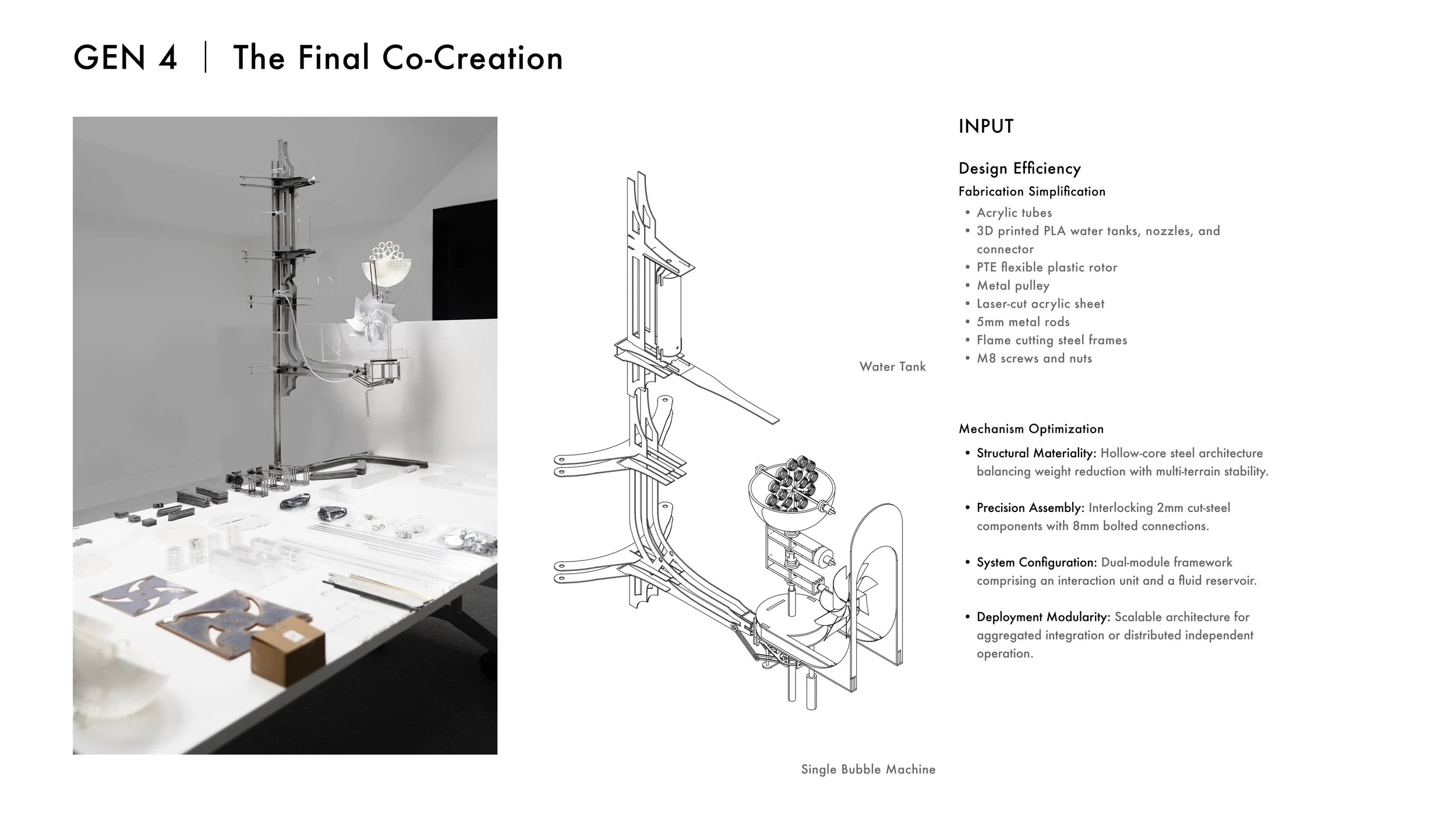
GEN 4
The Final Co-Creation
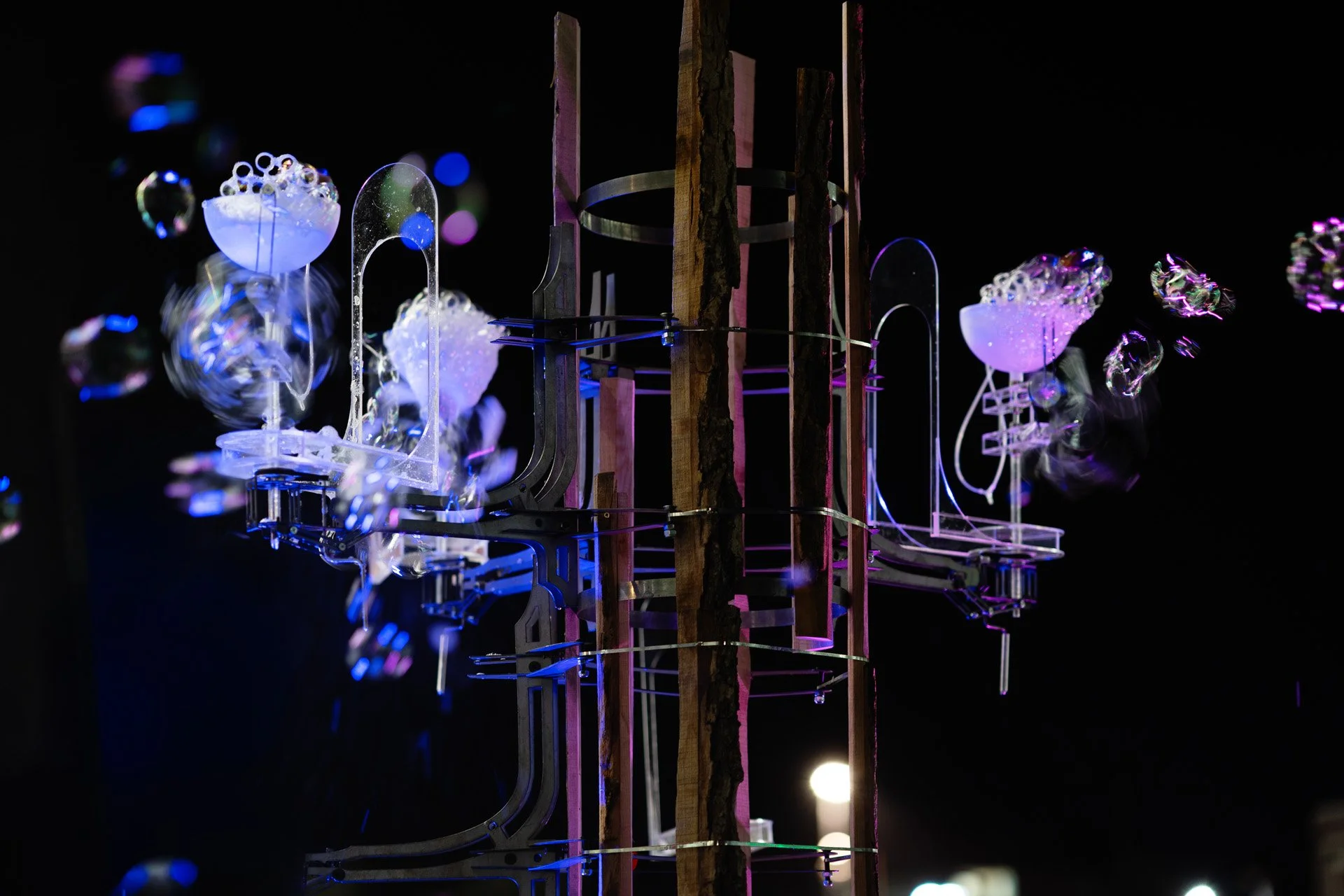
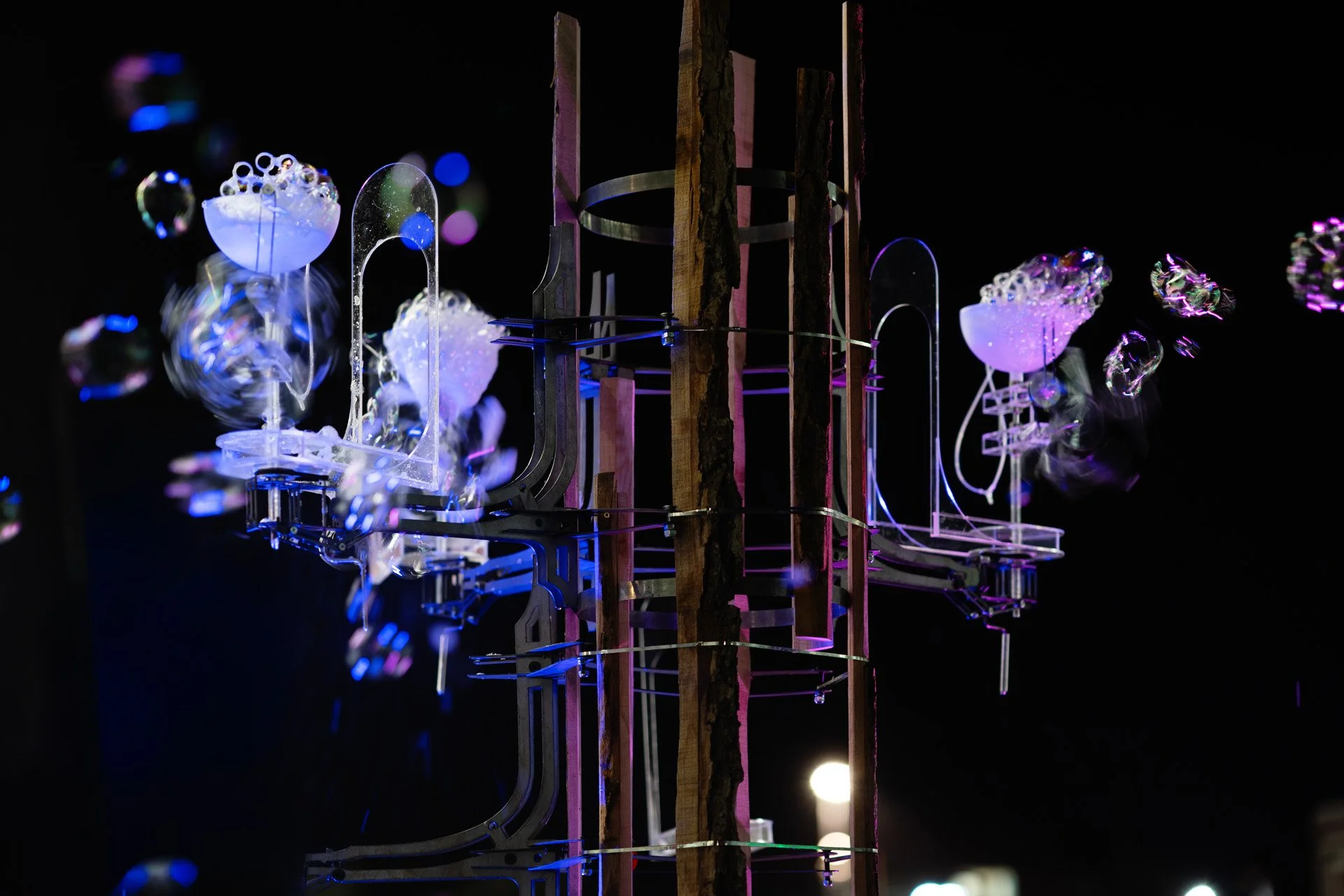
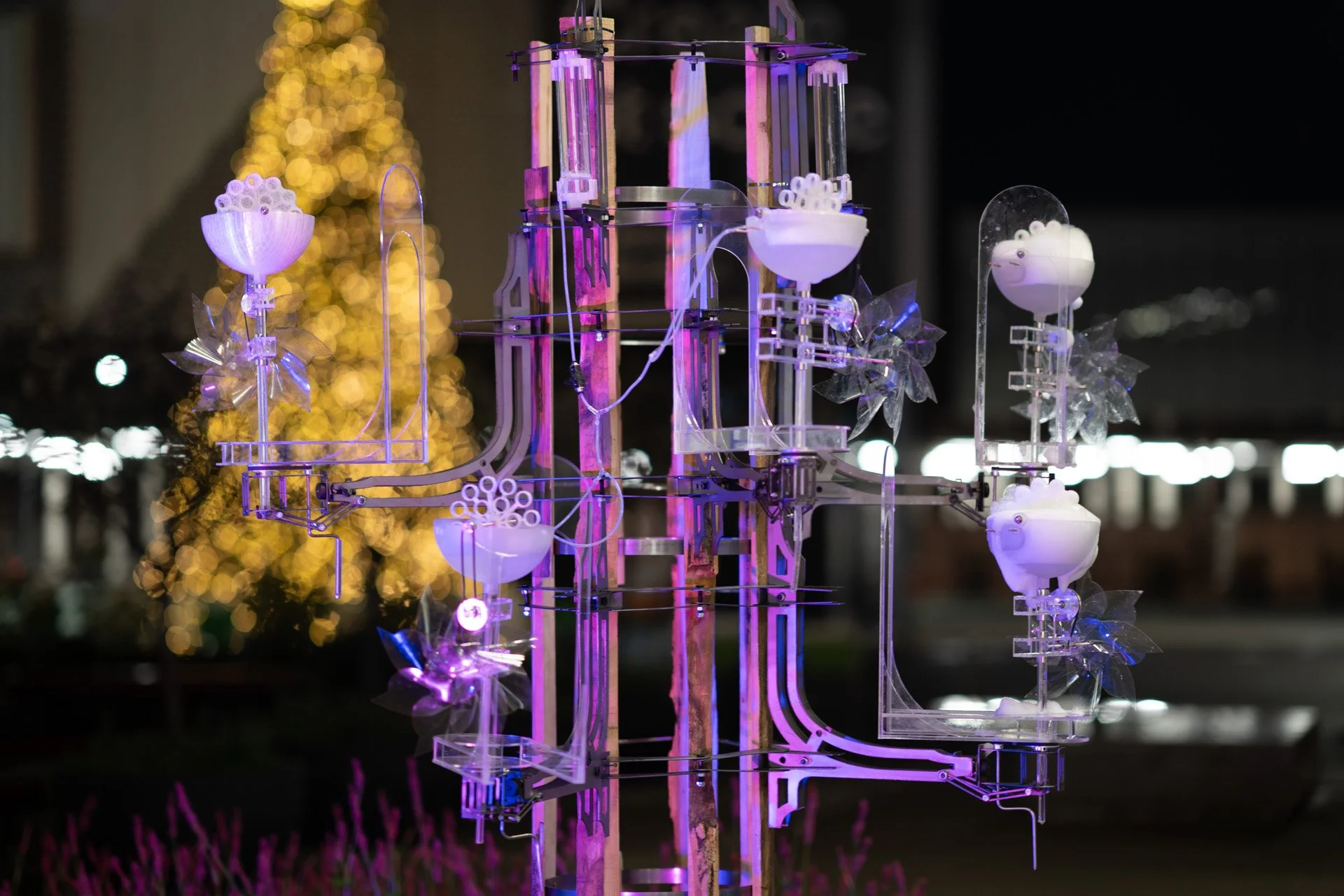
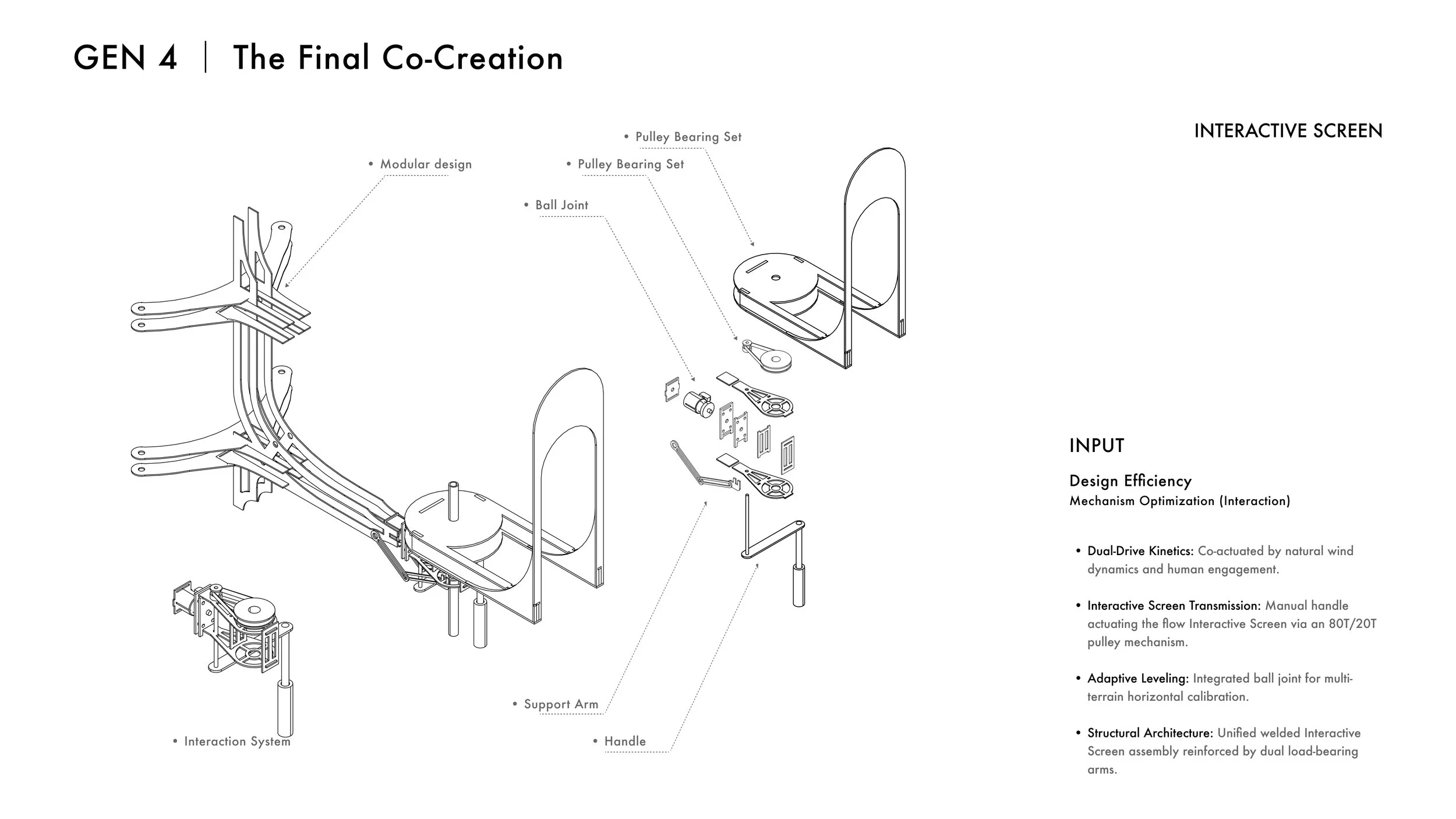
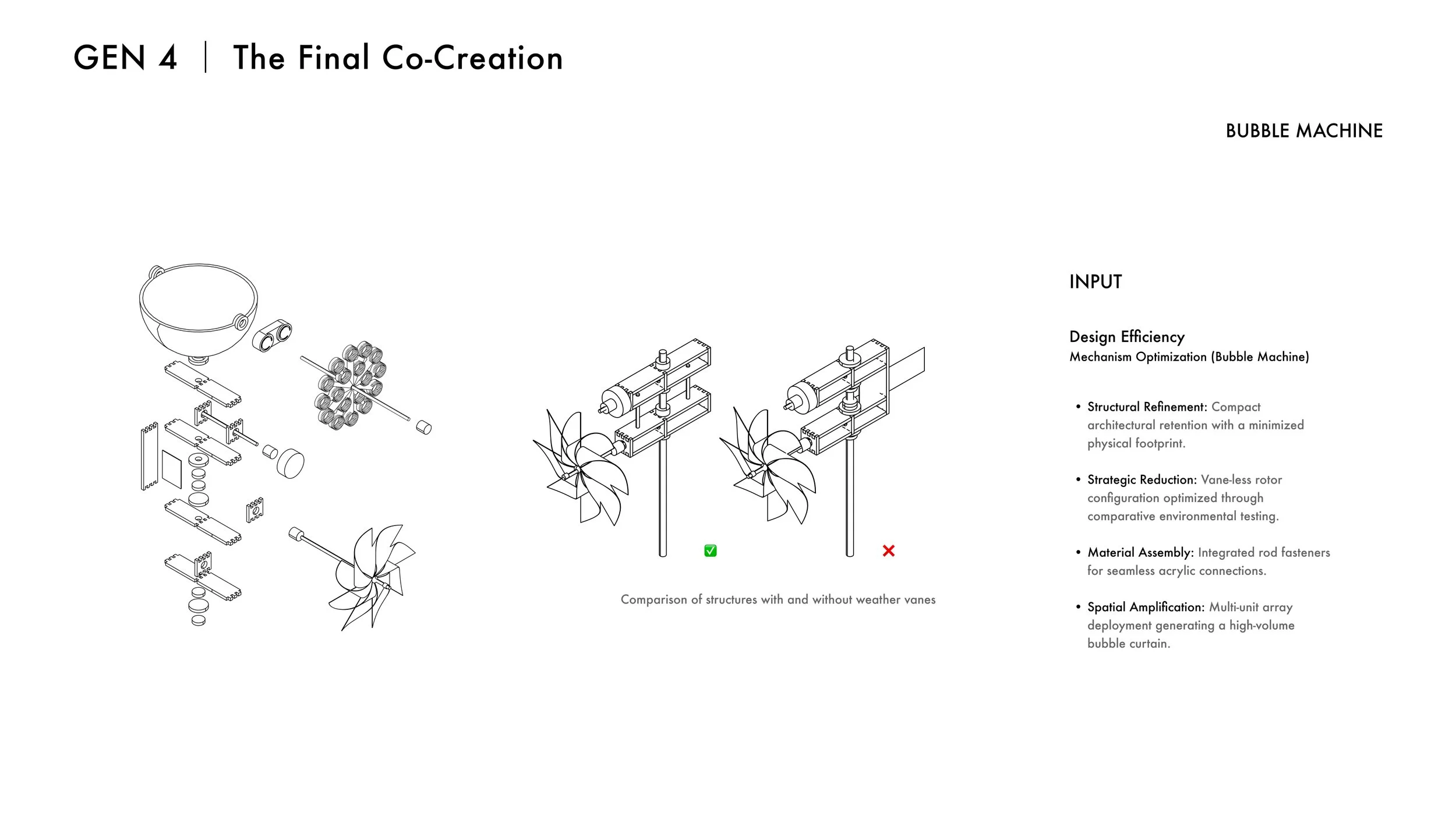
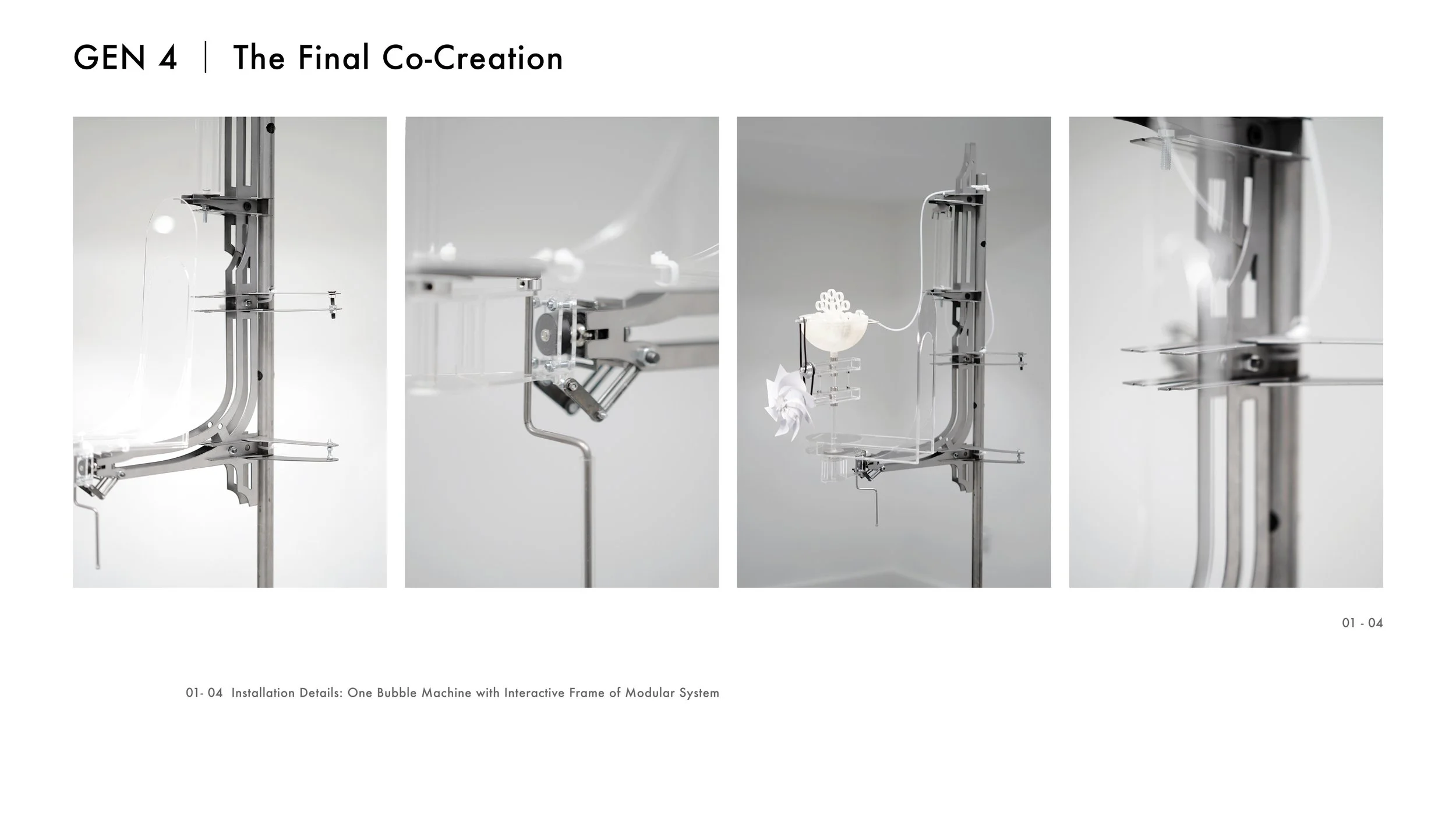
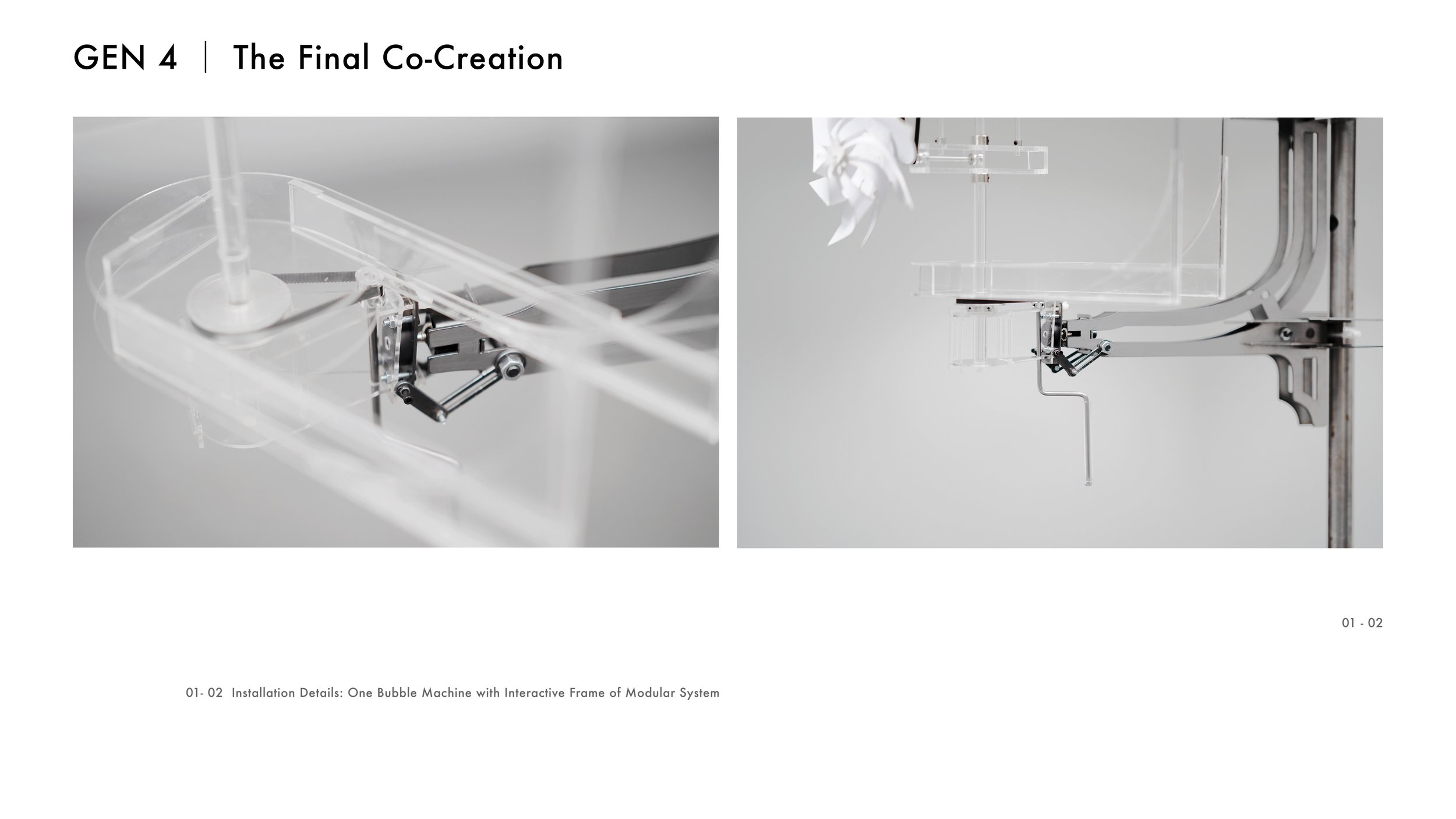
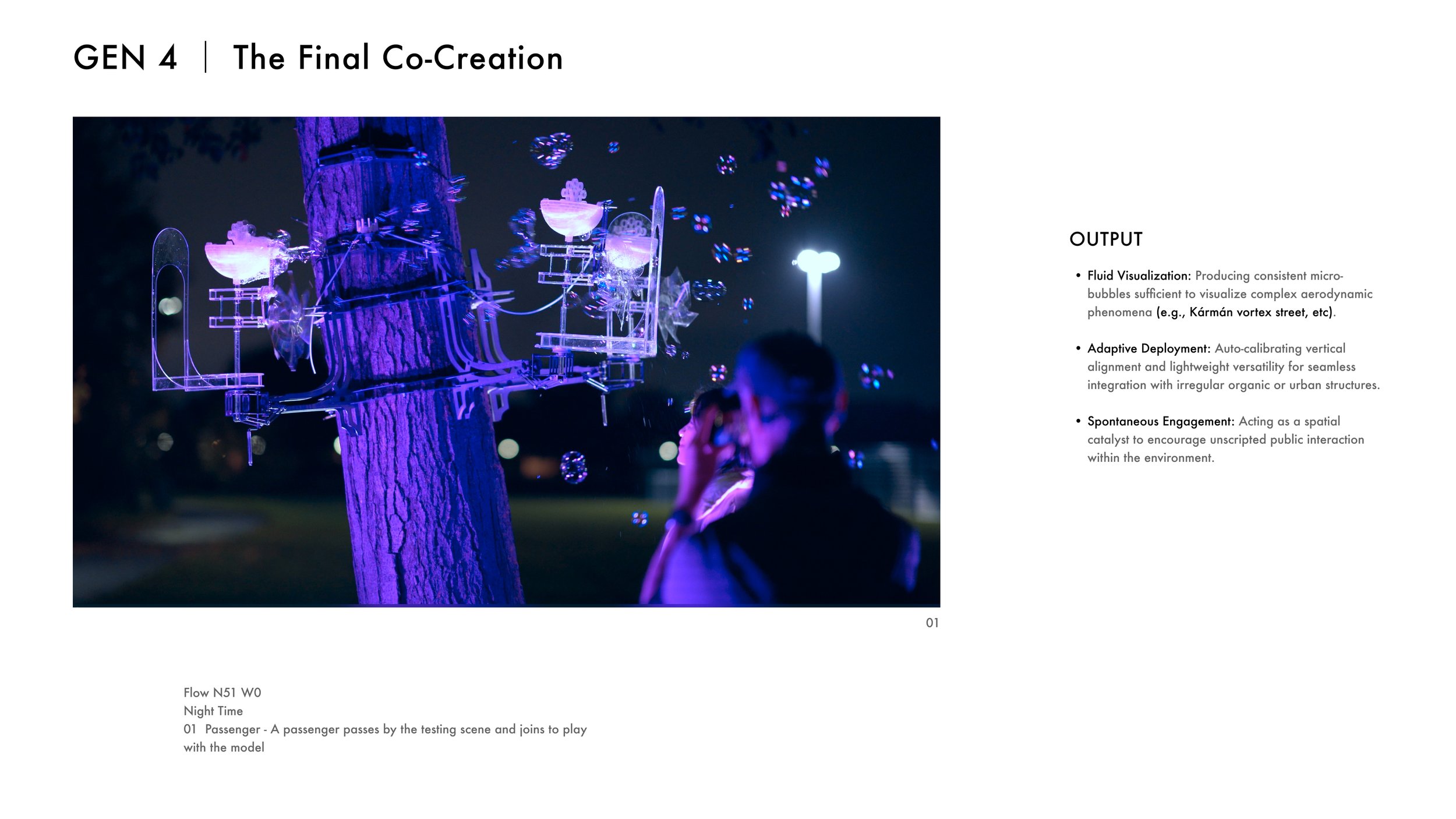
In its definitive generation, the architecture achieves pure structural synthesis and interactive intelligence. By stripping away external interventions, the airflow Interactive Screen and Bubble Machine merge into a single entity.
This evolution embodies our core pursuit:
maximizing dynamic spatial output through minimal energetic effort.
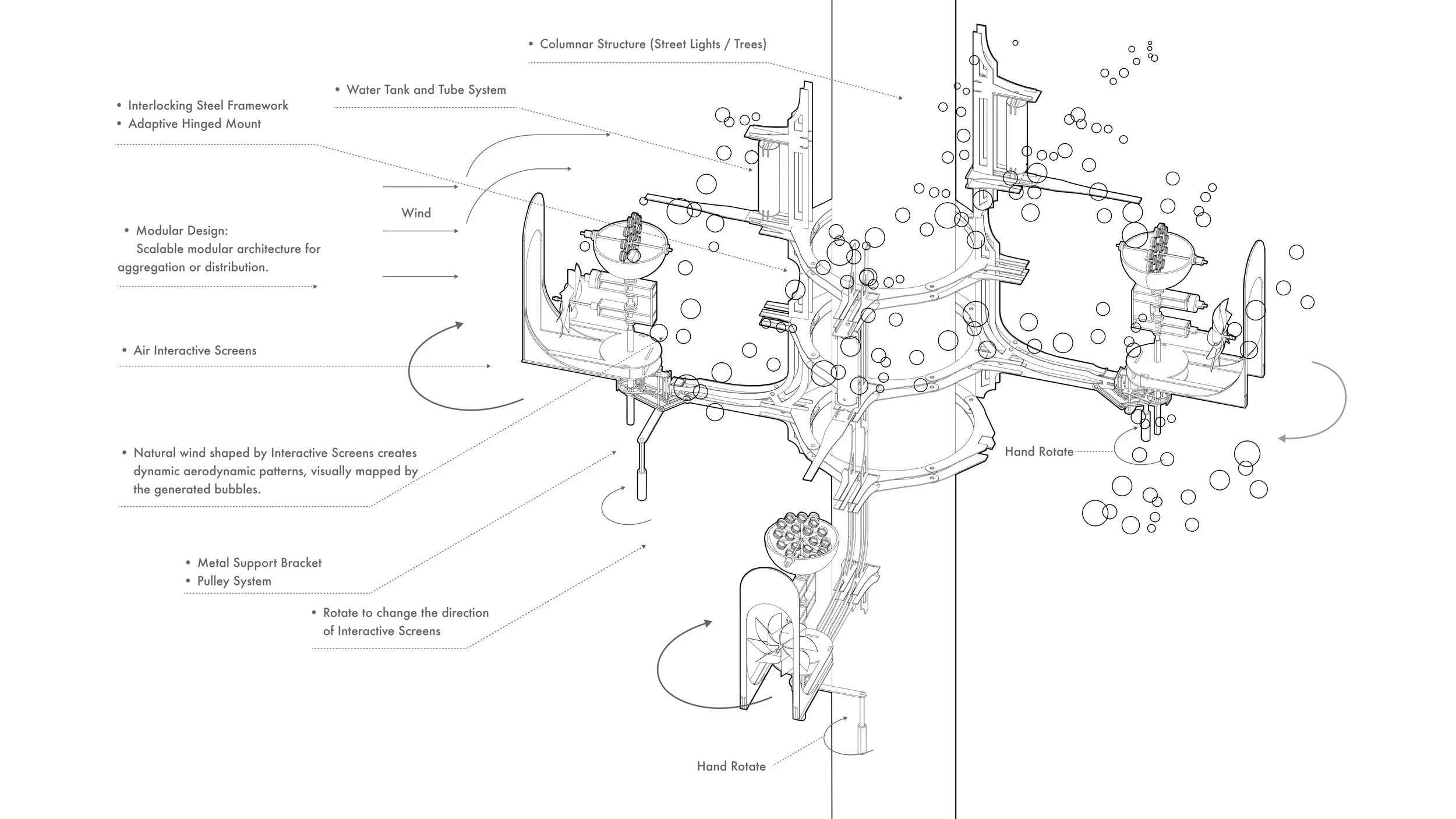
SYSTEM DESIGN
Spatial & Material Economy
Single Machine of the Modular System
W: 140cm L: 140cm H: 85-140cm
-
Classification
Interactive Installation
Kinetic Art
-
My Role (2 Person Team)
Concept Direction
Experiment-based Design
System & Interaction Design
Kinetic Design
Technical Development
Light Design
-
Design & Development Tool
Rhino|3D Modeling
Fusion|3D Modeling
Grasshopper|Simulation
3D Printing|Installation
Adobe Premiere Pro|Video Editing
-
In Collaboration With
Jiemin Ren